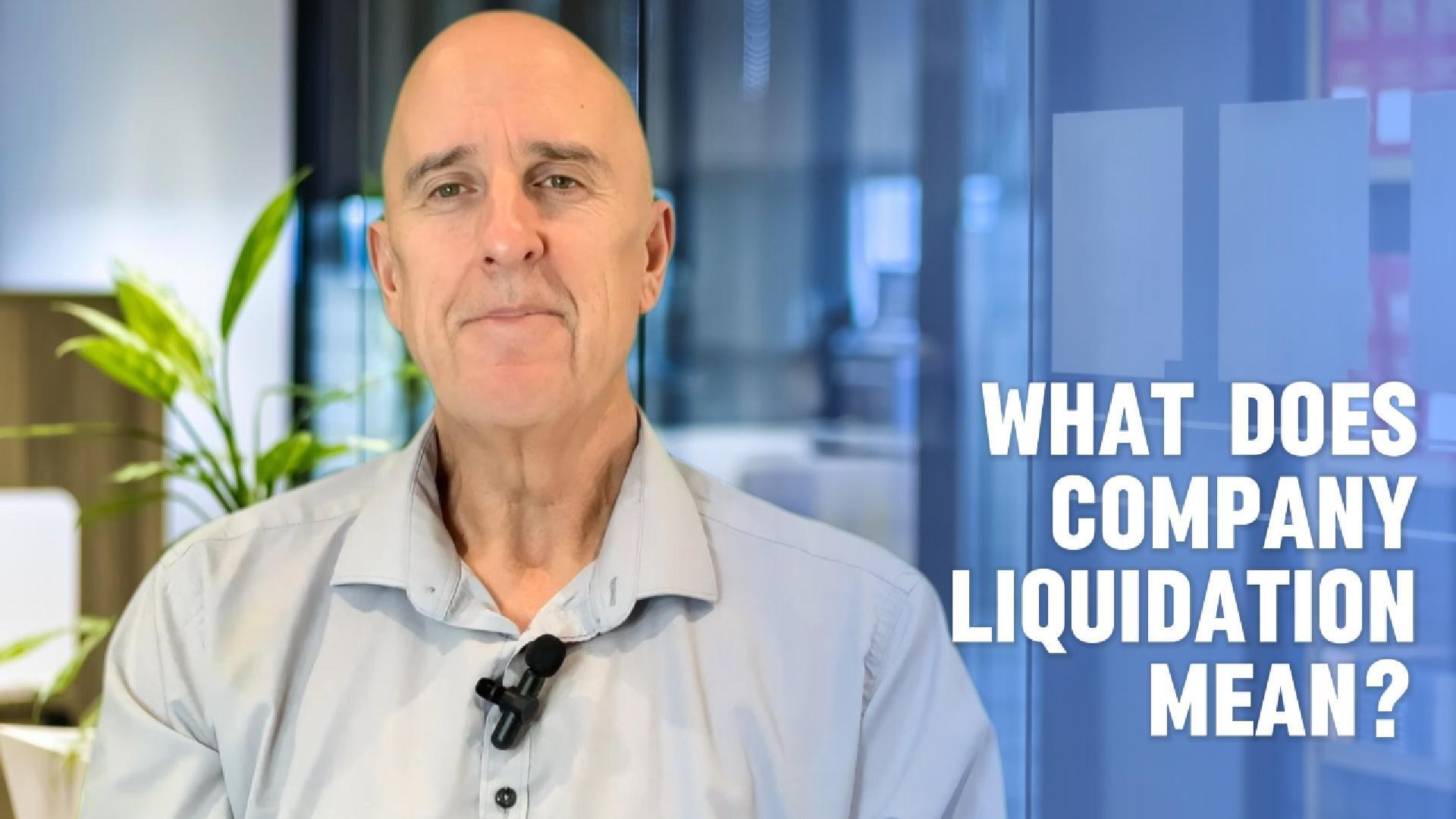
Liquidation is a formal insolvency procedure which is used to close a limited company which is no longer needed or wanted. There are several types of liquidation. The one most suitable for your company will depend on whether the business is solvent or insolvent at the time of liquidation, and whether the company is being liquidated voluntarily by its directors, or is being forced into liquidation by order of the court.
Liquidation is the formal process of closing a limited company with or without debts. Liquidation can be used to wind up a company due to insolvency, or simply as a means to extract the proceeds from a profitable and solvent business.
A licensed insolvency practitioner will be appointed to handle the liquidation process. It will be their role to identify all company assets before selling (or liquidating) these for the benefit of creditors. Any outstanding debts which remain after this process will be written off, unless they have been secured by a director’s personal guarantee. The company will then be wound up with Companies House, its name removed from the register of limited companies; it will then cease to exist as a legal entity.
“Spoke with Chris who put me at ease straight away. He was very knowledgeable and listened intently to all my worries and concerns. Will definitely be using Real Business Rescue and advise anyone with business issues to give them a call.”
Both solvent and insolvent companies can be liquidated. In fact, there are three main types of liquidation, and while all seek to achieve the same end result – that is the formal closure of the company – each process is distinct. The procedure used to place your company into liquidation depends mainly on its financial position at the time of entry into liquidation.
For solvent companies, this is done by way of a Members’ Voluntary Liquidation (MVL), while insolvent companies are liquidated through either a Creditors’ Voluntary Liquidation (CVL) or Compulsory Liquidation (WUC).
Insolvent liquidation via a Creditors’ Voluntary Liquidation (CVL)
A Creditors' Voluntary Liquidation (CVL) is initiated by the company’s directors when it has become clear that the company in question is insolvent and the chances of affecting a successful turnaround or restructuring are unlikely.
While this is a voluntary process, a CVL is typically only entered into when there are no other alternatives open to the company. CVL is often triggered by a downturn in company cash flow and unmanageable business debts. Directors should take early advice if they're experiencing issues such as the loss of a key customer or contract, tax arrears with HMRC, or being unable to repay your bounce back loan; all typical warning signs of a company in financial distress.
Court-ordered liquidation via a Compulsory Liquidation (WUC)
In some cases a company will be liquidated by order of the court rather than voluntarily by its directors. This typically happens following the issuing of a Winding Up Petition (WUP) by one or more of the company’s creditors. Following a WUP being advertised, the company’s bank accounts will be frozen to prevent assets being removed. The WUP will be heard by a judge, and if there is no adequate defence, a Winding Up Order will be granted which will lead to the company being forcibly wound up.
With compulsory liquidation an Official Receiver will be appointed to handle the winding up of the company and to deal with its creditors. The Official Receiver will be allocated by the courts, and their role will be to identify any company assets, realise these for the benefit of outstanding creditors, before formally winding up the company. An investigation into the conduct of the directors will then be undertaken to ascertain the reasons behind the company’s ultimate failure.
Solvent liquidation via a Members’ Voluntary Liquidation (MVL)
A Members’ Voluntary Liquidation – or MVL – is a liquidation option designed as a way for solvent companies to formally close their business when a company has reached the end of its useful life. This often happens when its director(s) have no further use for the company – either due to retirement or simply because they are moving on to a new venture – and want to access the profits tied up in the business.
The main benefit of an MVL is that it allows for funds to be extracted in a tax-efficient manner. This is because funds taken from a company via an MVL are treated as capital gains rather than income, therefore they are subject to Capital Gains Tax rather than Income Tax. As an added incentive, Business Asset Disposal Relief can also be applied which, if you qualify, will reduce the rate of Capital Gains Tax payable up to a lifetime limit of £1m worth of gains.
The different types of liquidation: A comparison guide
Creditors' Voluntary Liquidation (CVL)
Members' Voluntary Liquidation (MVL)
Compulsory Liquidation (WUC)
When Used
Company is insolvent (can't pay debts)
Company is solvent with assets to distribute
Court-ordered following winding up petition
Who Initiates
Directors/Shareholders
Directors/Shareholders
Creditor (via court petition)
Typical Cost
£4,000 - £6,000
£1,500 - £4,000
£0 as the petitioning creditor pays
Director Control
High - You choose the insolvency practitioner
High - You choose the insolvency practitioner and timing
None - court appoints Official Receiver
What Happens to Debts
Written off after assets distributed (unless personally guaranteed)
Paid in full from company assets
Written off after assets distributed (unless personally guaranteed)
Tax Benefits
None
Distributions incur CGT not income tax, plus Business Asset Disposal Relief
None
Timeframe
6-12 months
3-6 months
6-18 months
Best For
Insolvent companies where director wants to move on
Solvent companies closing, tax-efficient exit
Nobody - forced upon you
What is the liquidation process?
Once a company enters liquidation the directors' powers cease, and the appointed liquidator takes control of its affairs. From that point onwards, the appointed insolvency practitioner will work through a number of steps as follows:
Decision to liquidate - Directors meet to pass a resolution to liquidate the company
Liquidator appointed - A licensed insolvency practitioner must be appointed in order to start the liquidation process
Liquidation advertised - Once appointed, the insolvency practitioner will place an advert in the Gazette
Assets identified - Liquidator will identify company assets which could be used to repay creditors
Creditors and employees dealt with - Insolvency practitioner will liaise with creditors and employees and deal with outstanding claims
Distributions made - Proceeds from asset sales will be distributed to outstanding creditors on a heirarchical basis as set out in the Insolvency Act 1986
Director conduct investigation - An investigation into the conduct of the directors in the period leading up to the company's liquidation must be undertaken with any findings reported accordingly
Company dissolved - Once the liquidation is complete, the company will be dissolved and its name removed from the register held at Companies House. The company will cease to exist as a legal entity at this point.
What are the advantages of company liquidation?
Adhere to your duties as company director Voluntarily liquidating your company could help to mitigate the possibility of wrongful trading accusations. Directors have to adhere to certain legal duties and responsibilities; one of these is to act in the best interests of the company’s creditors as a whole once he or she is aware that the company is insolvent or is soon likely to become insolvent. Failure to do this would be deemed wrongful trading. By voluntarily contacting an insolvency practitioner at the early stages of insolvency, you are demonstrating your desire to prioritise your creditors interests.
Protection from Personal Liabilities If a director is found guilty of wrongful trading in a post-liquidation investigation they could be held personally liable for some or all of the company’s debts. When you choose to liquidate a company voluntarily you’ll be given professional guidance before, during, and after the procedure, reducing your chances of making any ill-informed decisions while the company is knowingly insolvent.
Avoidance of Court Procedures Voluntarily winding up your company through a CVL, rather than waiting for your creditors to force you into compulsory liquidation, will save you from having to be petitioned through the Courts. During a compulsory liquidation the petition to wind up your company is made public through an advertisement in the London Gazette meaning anyone will be able to see that your company is being forcibly liquidated. Although a petition advertisement still has to be listed in the Gazette if you opt for a CVL, it will be apparent that it was a voluntary decision, and not a hostile action taken by creditors or HMRC.
Sound familiar?
If any of this sounds familiar to your situation, speaking to an insolvency practitioner at an early stage can make all the difference when it comes to the future of your company. Don't delay the inevitable, talk to the experts at Real Business Rescue and get a clear, honest picture of your position. Our team of licensed insolvency practitioners are available now - 0800 644 6080
What are the disadvantages of company liquidation?
Additional Expenses Liquidating your company voluntarily may be more expensive for the directors when compared to waiting for a creditor or HMRC to force the company into compulsory liquidation. In a compulsory liquidation the cost of issuing a winding up petition is covered by the creditor doing the petitioning; however, in a voluntary liquidation, the cost of appointing an insolvency practitioner is paid for by the directors of the company being liquidated. However, if the insolvent company's assets are sufficient to meet the liquidation costs then the directors will not have to make a personal contribution.
Loss of Brand and Reputation After the company is liquidated all brand recognition will be lost. This may also affect the reputation of the company that has built up over the years. For this reason liquidation should be considered as a last resort, only after alternative options that would allow the company to continue trading have been examined and subsequently ruled out.
Facing a Post-Liquidation Investigation After every liquidation process the liquidator is required to investigate all actions taken by the directors in the time leading up to it becoming insolvent. This will be the case whether the liquidation is entered into voluntarily or is forced upon the company through a compulsory court-ordered liquidation.
The Possibility of Being Held Personally Liable While the protection offered through limited liability means that directors will not usually be held personally responsible for the debts of their company, there are certain instances where this does not hold true. If wrongful or fraudulent trading is discovered and later proved, then directors will typically be expected to contribute to the shortfall of the outstanding debts. Directors will also be held liable for company debts if they have signed a personal guarantee for any company borrowing.
What are the alternatives to liquidation?
While placing a company into liquidation is the formal process of bringing the business to an end, this is not the only way this can be achieved. In some situations, a full liquidation procedure will not be required. Instead, the company may be able to be dissolved; this is also known as company strike off.
Company strike off – or dissolution – is an informal process which allows a company to be removed from the register held at Companies House. This is achieved by its directors submitting a DS01 form and paying the relevant fee. A notice will be placed in the Gazette advertising of the strike off application and so long as no objections are received, the company will be struck off the register. Once it is taken off the register, it ceases to exist as a legal entity. It is often a quicker, easier, and cheaper alternative to liquidation; however, you should be aware that it is not suitable for all companies and all situations.
Dissolution is aimed at those companies which have reached the end of their useful life and are no longer required by the directors/shareholders; ideally, they should hold no assets or liabilities at the point of strike off.
If strike off is attempted by an insolvent company – that is, one which has outstanding debts – it should be expected that an objection will be lodged by a creditor; if this is done, the process will be halted and the company will remain active. It is in a creditor’s interests to stop your company being struck off should debts exist, as once a company is dissolved the money owed is not easily recoverable without a lengthy and complex process to restore the company to the register.
On the reverse side, if your company has assets including cash at bank, these become ‘bono vacantia’ upon strike off, with ownership passing to the Crown. Therefore, if your company has debts or assets, liquidation is the most appropriate way of closing the business and tying up its outstanding affairs.
How to get expert liquidation advice
Whether you have made the decision to walk away from a profitable business and would like to extract the profits tied up in the company, or whether escalating debts and falling income means the business can no longer service its outgoings, expert advice is vital in helping you make the right decision for you and your company.
Company liquidation may well be the answer, however, you must remember that the liquidation of a company, whether solvent or insolvent, is a major step to take and you must take professional advice to ensure this is appropriate for you and your business. A licensed insolvency practitioner will be able to discuss your options, explain the pros and cons of each, discuss your potential eligibility for redundancy, and make an expert recommendation about how you should proceed.
In the event of your company being insolvent, this may mean that you have to cease trading immediately in order to protect company assets and shield creditors from further losses; in some instances, however, continuing to trade may be advised if this will ultimately increase the funds available to creditors. It is only by taking the advice of a licensed insolvency practitioner that you can be sure whether continuing to trade is the right thing to do; get this wrong and you could find yourself personally liable for any resultant losses suffered by creditors.
What is the role of an insolvency practitioner in company liquidation?
As a formal insolvency procedure, liquidation can only be entered into following the appointment of a licensed insolvency practitioner. They will take on the role of liquidator and will be responsible for a number of things during the process including liaising with creditors, identifying and recovering company assets, and distributing the proceeds of these according to a designated hierarchy. In a solvent liquidation proceeds will be distributed to shareholders, while in the case of an insolvent liquidation, any recoverable funds will be split amongst the company’s outstanding creditors.
Need to speak to someone?
If your company is struggling with unmanageable debts, squeezed cash flow, or an uncertain future, you are far from alone. We speak to company directors just like you every single day, and we are here to give you the help and advice you need. Call our team today on 0800 644 6080
How Real Business Rescue can help with company liquidation options
If you are considering liquidation for your limited company, taking advice from a licensed insolvency practitioner should be your next step. Real Business Rescue have a nationwide network of over 100 licensed insolvency practitioners ready to provide the help and guidance you need when it comes to your options to closing your business and your potential entitlement to director redundancy. With a network of offices located up and down the country you are never far away from expert advice.
Call Real Business Rescue today on 0800 644 6080 to speak to a member of our team and arrange a free and completely confidential consultation with a licensed insolvency practitioner in your local area.
Frequently Asked Questions about Liquidation
How long does the liquidation process take from start to finish?
Members' Voluntary Liquidation typically takes 3-6 months for straightforward cases. Creditors' Voluntary Liquidation usually takes 6-12 months, though simple cases may complete sooner. Compulsory liquidation can take 6-18 months depending on complexity. Your active involvement is mainly required in the first few weeks for providing information and attending initial meetings.
Will I be able to start another company after liquidation?
Yes, you can start a new company immediately after liquidation, provided you haven't been disqualified as a director. However, you cannot use the same or similar company name for five years without court permission. Most directors who act responsibly face no restrictions as director disqualification only occurs if the investigation finds serious misconduct like wrongful trading or fraud.
What happens to employees when a company goes into liquidation?
All employees are made redundant when a company is liquidated, although the liquidator may keep some staff temporarily to help wind down operations. Employees can claim statutory redundancy pay, unpaid wages (up to 8 weeks), holiday pay, and notice pay from the National Insurance Fund, subject to statutory caps. These claims are processed by the Redundancy Payments Service. Directors who were employed by the company may also claim redundancy pay.
What's the difference between liquidation and administration?
Liquidation closes a company permanently, while administration aims to rescue the company or achieve a better outcome for creditors than immediate liquidation. Administration creates a moratorium stopping all creditor action while the administrator restructures the business, arranges a sale, or prepares for liquidation. Administration may lead to the company continuing under new ownership, whereas liquidation always results in company closure. Administration typically costs more but preserves the business if viable.
What happens to personal guarantees I've signed when the company is liquidated?
Personal guarantees remain enforceable after company liquidation. If you guaranteed business loans, commercial leases, or supplier credit, the lender can pursue you personally for any shortfall after company assets are distributed. Lenders typically wait until liquidation completes to assess the shortfall, then contact guarantors for payment. If you cannot pay, they may obtain a County Court Judgment, apply for a charging order against your property, or petition for your personal bankruptcy. Always disclose personal guarantees to your insolvency practitioner early so you can get the best advice.
Jonathan is a Partner at Real Business Rescue and member of both the Insolvency Practitioners Association (MIPA) and The Association of Business Recovery Professionals (MABRP). Jonathan has over 20 years’ experience guiding directors through CVL and MVL processes, helping them understand their options and navigate financial distress with clarity and compassion.
Member, Insolvency Practitioners Association
Associate Member, Association of Business Recovery Professionals
Still unsure whether liquidation is right for your company? Don't worry, the experts at Real Business Rescue are here to help. Our licensed insolvency practitioners will take the time to understand the problems your company is facing before recommending the best course of action going forward based on your own unique circumstances.
We provide free confidential advice with absolutely no obligation. Our expert and non-judgemental team are ready to assist directors and stakeholders today.
60 Second Test
Understand your company's position and learn more about the options available
This site uses cookies to monitor site performance and provide a more responsive and personalised experience. You must agree to our use of certain cookies. For more information on how we use and manage cookies please read our privacy policy