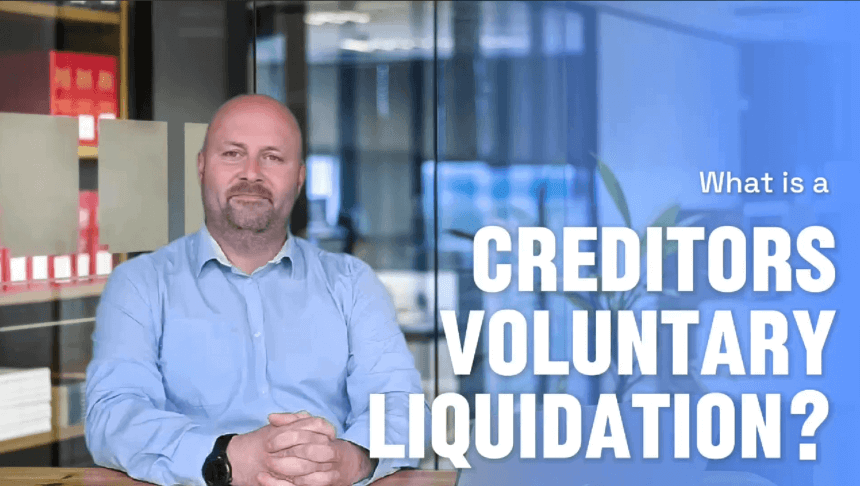
What is the process of a Creditor's Voluntary Liquidation (CVL)?
A Creditors' Voluntary Liquidation — or CVL — is the most common way to close an insolvent company in the UK. It is a formal, director-led process that allows you to wind down your company's affairs in an orderly way, deal with outstanding debts, and draw a line under the situation. A CVL can only be entered into with the guidance of a licensed insolvency practitioner who will be appointed to act as liquidator.
A Creditors' Voluntary Liquidation is a formal insolvency procedure used to close a company that can no longer pay its debts. It is the most common form of company insolvency in the UK. In 2025, 18,525 CVLs were registered in England and Wales, accounting for around 77% of all company insolvencies (Insolvency Service). If you are considering a CVL for your company, you are far from alone. The past four years have seen the highest annual CVL totals since records began in 1960.
As licensed insolvency practitioners, we guide directors through the CVL process from start to finish, from your initial consultation through to the company being dissolved and removed from the Companies House register. We don't just advise on the process; we are the professionals appointed to act as liquidator and manage every aspect of the liquidation on your behalf.
Although the process is entered into on a voluntary basis, it is often the result of many months of financial distress. Even though this is far from an ideal situation, for an insolvent company which has no viable future as a profitable entity going forwards, company liquidation by way of a Creditors' Voluntary Liquidation may be the best solution for both the company and its creditors.
In many cases a voluntary liquidation by way of a CVL can be funded using the assets of the company which will be sold off as part of the liquidation process meaning directors will not be required to pay the liquidation fees personally.
A CVL brings the company to a close and deals with all outstanding company debts as part of the process. While asset realisations will be maximised in order to provide a return to creditors, when a company enters CVL there is likely to be a significant shortfall to creditors with some company debt remaining outstanding.
As limited companies are classed as their own legal entity, the company's directors will not be expected to repay any debt of the company which remains outstanding after liquidation. In effect, company debt which remains after liquidation will be written off.
The exception to this rule is for company debts which have been personally guaranteed . If you have signed a personal guarantee responsibility for paying the outstanding amount of this borrowing will remain with you personally and will not be written off.
A CVL is likely to be the most appropriate option if your company is insolvent and there is no realistic prospect of trading back to a profitable position. The following signs typically indicate that a CVL should be considered:
Your company cannot pay its bills as they fall due and is relying on delaying payments to creditors to keep going
You have received a statutory demand or a winding-up petition from a creditor
HMRC has contacted you about unpaid tax liabilities and you are unable to agree a Time to Pay arrangement
You are using new borrowing or personal funds to cover day-to-day running costs
Your company's liabilities significantly outweigh its assets on the balance sheet
You have been advised that a Company Voluntary Arrangement or restructuring plan is not viable given the level of debt
If any of these apply to your situation, it is important to take professional advice quickly. Entering a CVL voluntarily, rather than waiting for a creditor to force compulsory liquidation through the courts, gives you more control over the process and demonstrates to the Insolvency Service that you acted responsibly once you knew the company could not be saved.
“Called for help with closing non-trading companies and Chelsea advised me on what to do and instead of taking advantage as others would by taking on the case and charging loads. She gave me a solution that would cost £20. Very pleased with the service and thankful for Chelsea’s advice.”
While in a CVL, the insolvency practitioner will be responsible for liaising with creditors, providing them with a Statement of Affairs, identifying company assets, and distributing any proceeds to creditors. They will also arrange for your company to be dissolved and removed from the Companies House register at the end of the liquidation process.
An insolvency practitioner will be able to give you the sound, practical advice you need when dealing with a distressed company and you are highly encouraged to speak to one at the earliest signs of insolvency. They will be able to discuss the various options available to you and your company which may involve rescue and restructuring procedures such as Administration or a CVA.
However, should the business be beyond rescue, orthe directors and shareholders have otherwise made the decision to close the company for good, a Creditors' Voluntary Liquidation is likely to be the most appropriate course of action.
Mounting creditor pressure?
If your creditors are growing increasingly impatient, it is time to take action. Ignoring the situation is only likely to make it worse. Take the first step today by contacting Real Business Rescue for immediate help and advice. The team are available now - 0800 644 6080
Creditors' Voluntary Liquidation: CVL Process and Timeline
1. Board meeting of Directors or Decision of Sole Director
Once the directors have taken the advice of a licensed Insolvency Practitioner and have decided to begin the voluntary liquidation process, they hold a meeting of the board or directors, or in the case of a sole director document a decision of a sole director, resolving to convene a general meeting of shareholders and a decision of creditors to place the company into liquidation (“Decision Date”).
It is at this point that the directors formally instruct a licensed Insolvency Practitioner to oversee the liquidation process and draft the relevant documentation, including a Statement of Affairs.
2. Notice to Shareholders and Creditors
Following the decision of the director(s) to commence the voluntary liquidation process, shareholders and creditors will be notified of the general meeting and Decision Date respectively.
Prior to the Decision Date, creditors will be presented the a Statement of Affairs of the company. This is a document which sets out the financial position of the company, detailing its assets and liabilities, providing estimated realisable values of company assets, and the estimated deficiency to creditors.
In addition a report is prepared by the Insolvency Practitioner providing a brief trading history, extracts from the company’s recent accounts and a deficiency account, detailing financial movements and assumed financial movements between the date of the last accounts and the date of liquidation. This report and the statement of affairs must be made available to creditors the day before the Decision Date, at the latest.
Creditors’ Voluntary Liquidation Free 60 Second Test
Our Confidential Test will help your understand your:
The general meeting of shareholders and Decision Date of Creditors will usually take place on the same day. In order for the company to enter voluntary liquidation at least 75% of shareholders must resolve to wind the Company up.
The Liquidation commences at 23:59 on the Decision Date, with the appointment of the liquidators being deemed approved. This can be conducted remotely with the director(s), which removes an element of stress from the process.
4. The Liquidation Process
During the liquidation of the company the Insolvency Practitioner will continue to liaise with creditors, resolve any issues related to creditor claims, and take the appropriate actions necessary to realise the company assets so that the proceeds can be used to distribute to outstanding creditors.
All assets will be independently valued, marketed and sold as appropriate. It is possible for the directors of the insolvent company to purchase assets of the company, as long as this sale is negotiated through the Insolvency Practitioner and they are purchased at market value.
The Insolvency Practitioner will also be responsible for collecting outstanding book debts, handling employee claims, issuing the necessary reports to government agencies, and distributing available funds to creditors. There is a set order of priority laid out in the Insolvency Act 1986 which must be followed when funds are being allocated to creditors. Secured creditors with a fixed charge are first in line for payment, followed by preferential creditors (including staff due arrears of wages), and then secured creditors with a floating charge (subject to any deductions for the Prescribed Part).
Unsecured creditors, such as suppliers and customers are next in the pecking order, although unfortunately at this stage there is unlikely to be sufficient remaining funds to allow for significant returns to be made.
What happens to me as a director during a CVL?
One of the most common concerns we hear from directors considering liquidation is what the process means for them personally. Here is what you need to know:
What happens to the company's debts during a CVL?
Once the CVL is complete and the company is dissolved, any debts that remain unpaid are written off. Creditors cannot pursue you personally for company debts unless you have signed a personal guarantee. If a personal guarantee is in place, responsibility for repaying the guaranteed amount will transfer to you as an individual once the company enters liquidation. If you are concerned about a personal guarantee, raise this with your insolvency practitioner at the earliest opportunity, there may be options available to manage your exposure.
Can I be a director again after a CVL?
Entering into a CVL does not automatically prevent you from acting as a director of another company in the future. In the vast majority of cases, directors are free to start a new business or take on a directorship elsewhere. However, there are restrictions around reusing a similar company name, known as the phoenix company rules under Section 216 of the Insolvency Act 1986, so you should always check with your insolvency practitioner before trading under a name that could be associated with the liquidated company.
Will my conduct be investigated during a CVL?
Yes. The liquidator is legally required to investigate the conduct of all directors in the period leading up to insolvency and submit a report to the Insolvency Service. This is a standard part of every CVL, it is not something to fear if you have acted honestly and in the interests of creditors. The investigation looks at whether there is any evidence of wrongful trading under Section 214 of the Insolvency Act 1986, or fraudulent trading under Section 213. If you sought professional advice early and took steps to protect creditors once you knew the company was in difficulty, a CVL is itself evidence that you acted responsibly.
What happens to my employees during a CVL?
Employees will be made redundant as part of the CVL process. Eligible employees can claim statutory redundancy pay, unpaid wages, holiday pay, and notice pay through the government's Redundancy Payments Service, which is funded by the National Insurance Fund. Directors who are also employees of the company may be eligible to make a claim themselves. Your insolvency practitioner will be able to advise on this.
How much does a CVL cost?
There is no fixed cost for a CVL as fees depend on the complexity of each case. As a guide, a straightforward CVL for a company with minimal debtors, few assets, and no ongoing legal action typically costs between £4,000 and £6,000 plus VAT.
In many cases, directors do not need to pay the liquidation fees personally. The costs are usually met from the sale of company assets, this includes physical assets such as vehicles and machinery, outstanding invoices owed to the company, and any cash held in the business bank account. If your company has sufficient assets to cover the liquidator's fees, you may not need to contribute anything from your own pocket.
If you are concerned about whether your company can afford to enter a CVL, this is something we can discuss with you during your initial consultation. There are often more options to cover the cost than directors realise. You can read a full breakdown of liquidation fees and how they are calculated in our detailed guide to liquidation costs.
Need to speak to someone?
If your company is struggling with unmanageable debts, squeezed cash flow, or an uncertain future, you are far from alone. We speak to company directors just like you every single day, and we are here to give you the help and advice you need. Call our team today on 0800 644 6080
How does a CVL compare to other options?
If your company is in financial difficulty, a CVL is not the only option available. Understanding how it compares to the alternatives will help you make the right decision for your situation.
CVL vs compulsory liquidation
Both a CVL and compulsory liquidation result in the company being wound up and dissolved. The key difference is who initiates the process. A CVL is a voluntary decision made by the company's directors, while compulsory liquidation is forced upon the company by a creditor through a winding-up petition presented to the court.
Entering a CVL gives you significantly more control. You choose the insolvency practitioner who will act as liquidator, you control the timing, and the process is generally quicker and less costly than compulsory liquidation. Importantly, choosing to liquidate voluntarily demonstrates to the Insolvency Service that you recognised the company's position and took responsible action.
CVL vs Company Voluntary Arrangement (CVA)
A CVA is a formal agreement between the company and its creditors to repay a proportion of its debts over a fixed period, usually three to five years. Unlike a CVL, a CVA allows the company to continue trading.
A CVA may be the better option if the underlying business is viable but is being held back by an unmanageable debt burden. However, a CVA requires at least 75% of creditors by value to vote in favour, and the company must be able to demonstrate that it can meet the proposed repayment schedule. If there is no realistic prospect of the business returning to profitability, a CVL is likely to be more appropriate.
CVL vs administration
Administration is a formal insolvency procedure designed to rescue the company as a going concern, or at least achieve a better outcome for creditors than an immediate liquidation would. An administrator is appointed to take control of the company's affairs while a plan is put in place.
Administration is typically used for larger or more complex businesses where there is a realistic prospect of rescue or where a sale of the business as a going concern could preserve jobs and deliver a better return for creditors. For smaller companies where rescue is not viable, a CVL is usually the more appropriate and cost-effective route.
Key takeaways
•A CVL is the most common insolvency procedure in the UK, accounting for around 77% of all company insolvencies in 2025. It is a director-led process that allows you to close your company in an orderly way.
•You may not need to pay the liquidation fees personally as in many cases the costs are covered by the sale of company assets.
•Entering a CVL voluntarily gives you more control than waiting for a creditor to force compulsory liquidation, and demonstrates to the Insolvency Service that you acted responsibly.
•A CVL will ensure all debt belonging to the company will be effectively written off, unless personally guaranteed.
•As licensed insolvency practitioners, Real Business Rescue can guide you through the entire CVL process from initial consultation to dissolution. Contact us for free, confidential advice.
How can Real Business Rescue help?
Call us today to arrange a free consultation and find out how we can help you and your company navigate its way out of distress. Whether your aim is to rescue the business, or alternatively if you are looking at ways to wind up your company on a voluntary basis, we can help. With 100+ offices across the country Real Business Rescue can offer unparalleled director advice no matter where in the UK you are based.
How long does a CVL take?
A CVL typically takes between four and twelve weeks from start to finish, depending on the complexity of the company's affairs. Straightforward cases with few assets and a small number of creditors can be completed relatively quickly. Companies with property, ongoing contracts, or outstanding legal disputes may take longer. The formal liquidation process begins once the shareholders pass a resolution to wind up the company, but the initial consultation and preparation work can usually be completed within a few days.
Can I still be paid as a director during a CVL?
Once the decision to liquidate has been made, directors should not continue to draw a salary or take any further payments from the company. Any payments taken after the point at which you knew the company was insolvent could be scrutinised by the liquidator and may need to be repaid. However, directors who are also employees of the company may be eligible to claim statutory redundancy pay, unpaid wages, holiday pay, and notice pay through the government's Redundancy Payments Service.
What happens to the company's contracts and leases?
When a company enters a CVL, the liquidator will review all existing contracts and leases. Most contracts will be terminated as part of the liquidation process. If the company has an outstanding lease on premises, the landlord becomes a creditor for any rent owed. The liquidator may be able to disclaim onerous property, meaning they can walk away from leases that have no value to the liquidation, but this must be done formally. If you have personally guaranteed a lease, that guarantee will survive the liquidation and the landlord can pursue you directly for any outstanding amounts.
Will entering a CVL affect my credit rating?
A CVL is a company procedure and is recorded against the company, not against you as an individual. It does not appear on your personal credit file. However, if you have personally guaranteed any of the company's debts, any default on those guarantees could affect your personal credit rating. Similarly, if you have an overdrawn director's loan account that you are unable to repay, the liquidator may need to pursue this as a debt owed by you personally.
Shaun is a Partner at Real Business Rescue, specialising in supporting SME directors in financial distress and helping them understand their options. Shaun has over 30 years' experience in guiding directors through CVL, MVL, and business recovery processes. Shaun holds the Certificate of Proficiency in Insolvency (CPI).
Still unsure whether liquidation is right for your company? Don't worry, the experts at Real Business Rescue are here to help. Our licensed insolvency practitioners will take the time to understand the problems your company is facing before recommending the best course of action going forward based on your own unique circumstances.
We provide free confidential advice with absolutely no obligation. Our expert and non-judgemental team are ready to assist directors and stakeholders today.
60 Second Test
Understand your company's position and learn more about the options available
This site uses cookies to monitor site performance and provide a more responsive and personalised experience. You must agree to our use of certain cookies. For more information on how we use and manage cookies please read our privacy policy