








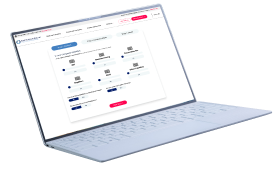
60 Second Test
Understand your company's position and learn more about the options available

Require Immediate Support? Free Director Helpline: 0800 644 6080
If your construction company can no longer pay its debts as they fall due, you have two options: rescue the business or close it down. The path that is right for you depends on whether the underlying business is viable, which a licensed Insolvency Practitioner can help you work out. Reliable income streams, steady contracts, and strong working relationships with your supply chain are signs of a foundationally strong construction business.
Rescue typically means a Company Voluntary Arrangement (CVA), a Time to Pay arrangement with HMRC, or administration, each route gives you breathing space from construction creditors. Closure is usually achieved through a Creditors' Voluntary Liquidation (CVL), during which outstanding affairs with creditors, including suppliers, trade merchants, and subcontractors, are settled.
Free 60 Second Test
For Ltd Company Directors
What are you looking to do?
Choose below:
Construction is an industry high in demand, but prone to financial difficulty, with retentions withheld months after completion, long and unpredictable payment chains, and cash effectively deducted at source. With construction companies cash-strapped as a result, it takes only one client dispute, a slow period, or a large customer's insolvency to tip a business into insolvency.
Construction has been the UK's most financially distressed sector for four years running. In the 12 months to May 2026, 3,803 construction companies entered insolvency in England and Wales, which accounts for 17% of all company insolvencies recorded, according to the Insolvency Service.
Our company insolvency statistics also show construction as the sector with the highest number of businesses in critical financial distress. The construction directors that come to us rarely fail because there's no work, the problem is usually the length of time it takes to get paid, last-minute lost contracts, and cash flow pressures.
The majority of directors we speak with commonly cite the same set of pressures that include:
Retentions and unpaid final accounts - While withholding retentions until practical completion is standard practice in construction, if the client then becomes insolvent, this poses a major risk to the balance sheet.
The practice of retentions in construction is under reform. The government's Commercial Payments Bill proposes a ban on withholding retention payments under construction contracts, alongside a 60-day cap on payment terms, and mandatory interest on late payments.
Payment delays - Construction has some of the longest average payment delays of any UK sector. A dispute two or three tiers up the chain can significantly delay subcontractor pay.
Fixed-price contracts - Materials, energy, and labour costs can shift significantly between tender and delivery, which can quickly make a fixed-price contract loss making.
Construction Industry Scheme (CIS) and VAT domestic reverse charge - The reverse charge removes upfront VAT on invoices, which creates cash flow pressures for subcontractors.
Part-completed contracts - A construction company that experiences financial difficulty mid-project must carefully consider its options due to the impact on live sites, work in progress, retention entitlements, and performance bonds tied to specific unfinished contracts.
“It’s rare that we speak to a construction director who doesn’t cite late payments as a precursor to their insolvency. Larger firms are usually the persistent offenders. As their invoices are often of higher value, every day that payment stands overdue has serious consequences for businesses that are already cash-strapped.”
Shaun Barton, Partner, Real Business Rescue
If your construction company is insolvent, your legal duty as a director shifts from acting in the best interests of shareholders to creditors. Continuing to take on new contracts, deposits, or materials on credit once you know the company can't pay its debts can result in wrongful trading.
Where company closure is the desired outcome, this can be achieved through a Creditors' Voluntary Liquidation (CVL), for which a licensed Insolvency Practitioner is required.
Your considerations when closing a construction company include terminating contracts or novating part-completed contracts to another contractor to complete. Retention money is a debt owed to the company, so this will be collected. Any performance bonds or personal guarantees will also be called upon.
If your construction company is solvent and you want to close it down for other reasons, such as retirement or restructuring, a Members' Voluntary Liquidation (MVL) is a tax-efficient closure route for construction businesses with substantial retained profits.
UK’s number one for director advice
We handle more corporate insolvency appointments than any other UK firm; demonstrating our commitment to helping directors and business owners in financial distress.
The team are available now - 0800 644 6080
Get a Quote Find Your Nearest Office
If the underlying business is viable and the problem is cash flow rather than a lack of demand, several rescue routes are worth exploring before defaulting to closure.
Company Voluntary Arrangement (CVA) - A CVA is a formal, legally binding agreement with creditors to repay debts over an agreed period, typically three to five years, while the company continues trading. This is useful for construction businesses that have hit their credit limits and accumulated debts across the board.
Time to Pay (TTP) – A TTP is an arrangement that lets you repay tax arrears in instalments and avoid entering a formal procedure. This is a common pressure for construction companies, given the impact of CIS deductions and the VAT reverse charge.
Administration gives the company breathing space to restructure or find a buyer. During a construction administration, the administrator can novate live contracts to a buyer, so part-finished sites keep progressing under new ownership rather than stalling.
Pre-pack administration involves the sale of the business or its assets before the company enters administration. This is common in construction to maintain the smooth running of live sites and ensure completion remains on track under new ownership.
Invoice finance is a cash flow tool that lets you unlock funds from your invoices early. Most directors we speak with have invoice finance, given the notoriously long payment cycles in construction.
A specialist cladding and glazing contractor established over 30 years ago ran into serious difficulty when a client with a major contract started a dispute and withheld payment. The company used its cash reserves to keep trading for six months amid the dispute. By the time the client formally claimed over £400,000, the company’s reserves were exhausted, and the company was insolvent.
The company entered administration, during which 11 staff were made redundant, while all remaining jobs were preserved. Company assets were sold to another firm, and trading continued through another company.
"This is a pattern we see often in construction. A business that's fundamentally sound gets pulled under by a single contract dispute, because they don’t have a cash reserve big enough to absorb six months of a client simply not paying. The administration meant the business as a whole kept trading and most of the workforce kept their jobs, which would’ve been a different story if the company entered liquidation."
Shaun Barton, Partner, Real Business Rescue
If your construction company enters liquidation, you may be entitled to claim director redundancy through the Redundancy Payments Service, provided you were also an employee of the company.
Beyond that, three things are worth understanding early:
Personal guarantees - Directors of construction companies often give personal guarantees to plant hire firms, materials suppliers, or asset finance providers. A personal guarantee is not affected by company insolvency and must be repaid.
Overdrawn director's loan accounts - If you've drawn more from the company than you’ve put in, you must settle the overdrawn director’s loan, and it will be pursued by the Insolvency Practitioner.
Wrongful trading - Taking on new contracts, deposits, or supplier credit after the company becomes insolvent has serious consequences, including personal liability for company debts. This is known as wrongful trading.
If you suspect that your construction company is insolvent, seek immediate advice from a licensed Insolvency Practitioner.
We provide free, no-obligation advice to construction company directors, whether you're looking to rescue the business or close it down properly. Every conversation starts with understanding your specific contracts, retentions, and creditor position. Call us for a free and confidential consultation, and one of our licensed Insolvency Practitioners with hands-on construction expertise will talk you through your options.



For Ltd Company Directors
What are you looking to do?
Choose below:
We provide free confidential advice with absolutely no obligation.
Our expert and non-judgemental team are ready to assist directors and stakeholders today.
Understand your company's position and learn more about the options available

Find your nearest office - we have more than 100 across the UK. Remote video and telephone meetings are also available

Free, confidential, and trusted advice for company directors across the UK